
Termites found? The next step depends on where and how they are active.
FAB reviews the inspection findings, affected areas, property construction and access conditions before recommending an appropriate termite-treatment approach.
- PERTH-OWNED
- LICENSED TECHNICIAN
- TREATMENT DOCUMENTATION
- CLEAR RECOMMENDATIONS
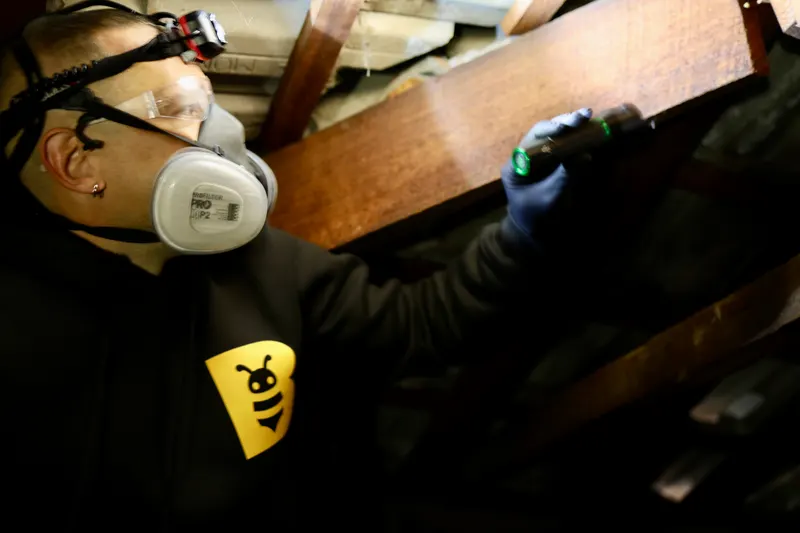
Documented. Photographed. Treatment record and recommendations. Clearly explained.
Treatment should respond to what was actually found.
Termite activity, property construction, access, affected areas and previous treatment history can all influence the recommended approach. FAB reviews the available inspection findings before defining the treatment scope.
- Termite species or activity evidence where identifiable.
- Location and extent of activity.
- Accessible and inaccessible areas.
- Construction type and foundations.
- Moisture and conducive conditions.
- Previous termite treatment or management systems.
- Surrounding property risks.
Real job: why every termite treatment is different
Fabien explains how service pipes, soil levels and hidden building conditions can affect the way termite protection is planned and carried out.
Filmed on a real FAB termite job in Perth. Subtitles included.
There is no single termite treatment for every property.
Depending on the findings and site conditions, treatment recommendations may include, where appropriate:
- Localised treatment of identified activity.
- Treatment of affected timber or concealed areas.
- Soil treatment or a chemical management zone.
- Baiting or monitoring systems.
- Physical or chemical protection measures during suitable building work.
- Recommendations to address moisture, access or conducive conditions.
- Ongoing inspection or monitoring.
The appropriate method, product, treated area and follow-up schedule depend on the inspection findings and site conditions.
What Fabien assesses before treatment begins.
Activity and affected areas
- Where termite activity or damage was identified.
- Accessible extent of the affected area.
- Structural elements involved.
- Evidence documented in the inspection report.
- Areas requiring further access or investigation.
Property and treatment conditions
- Construction type and foundation.
- Soil, slab, subfloor or perimeter access.
- Previous treatment systems.
- Plumbing, drainage and moisture conditions.
- Safety, occupant and pet considerations.
- Areas where treatment cannot be applied or confirmed.

The final scope is based on the areas that can be assessed and treated safely, together with the limitations identified before work starts.
How termite treatment works with FAB.
- 01
Review the findings
FAB confirms the inspection evidence, affected areas and known limitations.
- 02
Define the treatment scope
Fabien explains the recommended method, access requirements, preparation and price.
- 03
Complete the agreed work
The approved treatment is carried out in accordance with the applicable product label and treatment plan.
- 04
Document and explain next steps
You receive relevant treatment records, follow-up guidance and future inspection or monitoring recommendations.
Clear records of the work completed.
Where applicable, FAB provides treatment documentation recording the work carried out, the treated areas and the relevant product or installation details.
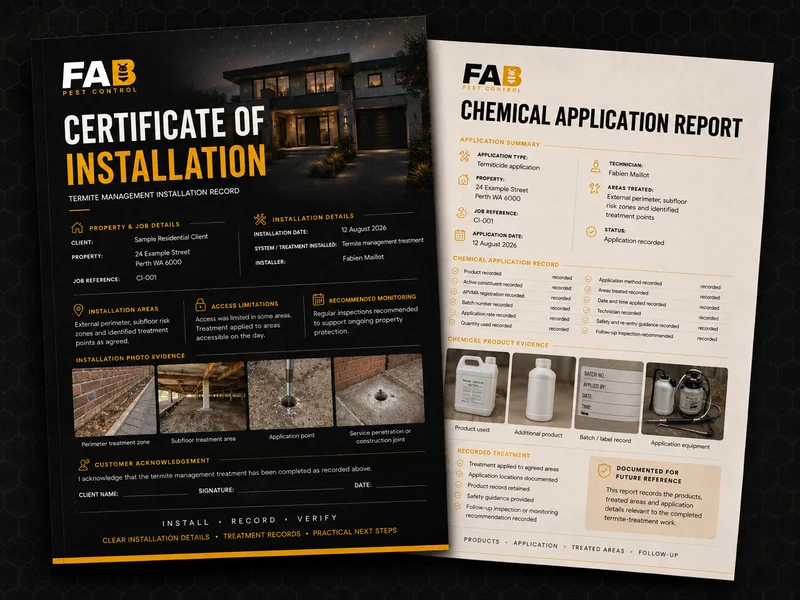
Example treatment documentation: Certificate of Installation and Chemical Application Report.
- Treatment scope and property details.
- Treated areas or installation locations.
- Product and application record where applicable.
- Certificate of installation where applicable.
- Preparation, safety and aftercare guidance.
- Follow-up, monitoring and inspection recommendations.
The documents provided depend on the treatment completed. Not every job receives every document.
Localised treatment and broader termite management serve different purposes.
Localised treatment
May be considered when:
- Activity is identified in a defined accessible area.
- The treatment target can be clearly established.
- The recommendation is supported by the inspection findings.
Localised treatment addresses identified activity but may not provide whole-property termite management.
Broader management approach
May involve:
- A soil treatment or management zone.
- Baiting or monitoring systems.
- Treatment around relevant building areas.
- Ongoing inspection and maintenance requirements.
The most appropriate approach depends on the construction, access, termite risk and inspection findings.
Termite treatment reduces risk — it does not remove the need for future inspection.
- Concealed or inaccessible activity may not be fully visible.
- Treatment applies to the agreed and accessible scope.
- New termite activity may occur in the future.
- Follow-up inspections or monitoring may be recommended.
- Property changes, moisture, landscaping or building works can affect risk.
- Customers must follow preparation, maintenance and access guidance.
- Treatment does not guarantee that all existing damage has been found.
Preparing for termite treatment.
- Provide access to the agreed treatment areas.
- Move stored items where requested.
- Confirm pets, children and occupant arrangements.
- Advise FAB of plumbing, electrical or building changes.
- Provide previous termite reports or treatment records where available.
Preparation requirements vary with the treatment method. FAB will confirm the exact steps before work begins.
What happens after treatment.
- Fabien explains the completed work.
- Relevant documentation is provided.
- Re-entry or safety directions are confirmed.
- Monitoring or follow-up requirements are explained.
- Future termite inspections remain important.
- Conducive-condition recommendations are recorded.
Common questions.
Do I need a termite inspection before treatment?
In most cases yes. Appropriate treatment depends on where activity has been identified, the construction of the property, accessible areas and any conducive conditions. FAB reviews the inspection findings before recommending a scope.
What termite-treatment options are available?
Depending on the property and the findings, options can include localised treatment of identified activity, soil treatment or a chemical management zone, baiting or monitoring systems, and treatment of affected timber or concealed areas. Not every option is appropriate for every property.
How is the right treatment selected?
By reviewing the inspection evidence, affected areas, construction, access, previous treatment history and conducive conditions. Fabien explains the recommended method and any limitations before the work begins.
Is localised treatment enough on its own?
Localised treatment addresses identified activity in a defined accessible area. It does not necessarily provide whole-property termite management. Ongoing inspection or a broader management approach may be recommended.
How long does termite treatment take?
It varies with the method, property size and access. Fabien confirms the expected duration and any preparation requirements before the visit.
Do I need to leave the property during treatment?
This depends on the products used and the areas treated. Any re-entry or safety directions are confirmed before work starts.
Is termite treatment safe around children and pets?
FAB uses APVMA-registered products applied strictly to label, and confirms occupant, pet and re-entry requirements before treatment. Follow the specific instructions provided for your job.
Will treatment damage floors, walls or landscaping?
Treatment is planned around the identified areas and access. Any drilling, trenching or disturbance is discussed and agreed before work begins.
Do you provide a certificate or chemical report?
Where applicable, FAB provides treatment documentation recording the work carried out, treated areas and relevant product or installation details. The documents provided depend on the treatment completed.
Does treatment come with a warranty?
Any warranty terms depend on the treatment method, products used and the specific job. Applicable terms are confirmed in writing at the time of quotation — no universal guarantee applies.
Can termites return after treatment?
Yes. New termite activity can occur in the future, and property changes, moisture, landscaping or building works can affect risk. Follow-up inspections or monitoring are usually recommended.
How often should the property be inspected after treatment?
Annual inspections are the baseline recommendation. Higher-risk properties may benefit from more frequent checks or a monitoring system.
What happens if an area is inaccessible?
Any obstructed or inaccessible areas are noted in the inspection findings and treatment scope. Alternative options can be discussed where appropriate.
Does termite treatment repair existing damage?
No. Treatment addresses termite activity — not the repair of any existing timber damage. Repair work is a separate scope, usually handled by a licensed builder.
Termite treatment across our core Perth service area.
- Western Suburbs
- Riverside South
- Inner North-East
- Inner West
- Selected South-East Suburbs
Treatment availability depends on the property, inspection findings, access and required scope. Check your suburb — FAB will confirm availability.
Request a treatment assessment.
FAB will review the property details and confirm whether an inspection or additional information is required before treatment can be scoped.
Start with the findings — not a one-size-fits-all treatment.
Tell FAB what has been found or share the details of your existing termite report. We'll confirm the most appropriate next step.